
Brooke Tufts Reflects on Successful Career
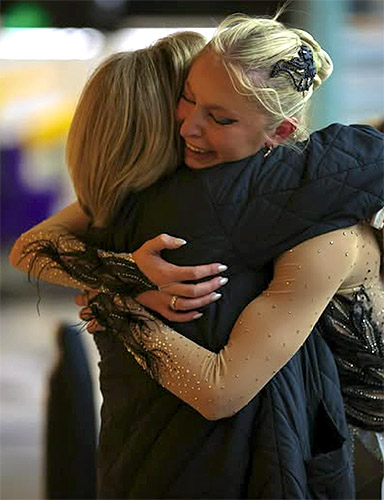
Photos by Melanie Heaney and Robin Ritoss
In December 2025, Brooke Tufts announced her retirement from competitive ice dance via a post on her personal Instagram account. She won the gold medal at the National Solo Dance Final in 2021, 2023 and 2025 and over the last several seasons collected gold medals at international events. In her final competition, she finished on the top step of the podium at the Épinal Solo Ice Dance International in France.
As the 2026 National Solo Dance Series started this weekend, Brooke took some time to speak with us about her retirement, career and future plans.
REFLECTING ON RETIREMENT
IDC: What was the turning point that made you feel ready to retire from competitive solo ice dance?
Brooke: I’ve been incredibly lucky to have such a successful career, and I reached a point where I truly felt I had accomplished everything I set out to do. I chased the goals I once only dreamed about, and I proved to myself that I could become the skater I always hoped to be. That alone gave me a deep sense of peace. But the real turning point was realizing that I was ready for a new chapter. I felt a strong pull to give back everything this sport has given me. I want to give what I’ve learned into the next generation of skaters, to support them the way I was supported, and to help them find their own paths in this sport. Letting go of competing wasn’t easy, but it felt right. It felt like growth.
IDC: How long had you been considering stepping away, and who were the first people you talked to about it?
Brooke: The idea of retirement had been quietly there for a while. It really started in 2023 after I won my second National Final gold medal. I remember having a reflective moment with my family where it felt like, “Okay… what do I do now?” I had accomplished everything I set out to do in Solo Ice Dance, and part of me felt like I had done my job. My family felt that too and gently started bringing it up. Then the news came that Solo Dance would have international events, and everything shifted. Suddenly I had a new goal, and I was so excited. I realized I wasn’t ready to step away from competitive ice just yet, and that opportunity gave me a reason to keep going a little longer.
IDC: What emotions came up as you wrote and shared your retirement announcement? Final Competition – Épinal International
Brooke: The emotions were very mixed but mostly happy. Épinal had many tears, but they were all full of joy. I truly don’t think I could ever put into words how grateful, happy, and at the same time a little sad I was and still am. It felt like closing a chapter that shaped my entire life. More than anything, I wanted to make sure I left in a way that showed how much this sport has meant to me. Skating gave me purpose, confidence, lifelong relationships, and memories I will carry forever. I wanted my final moments on the ice to reflect that gratitude and respect for everything it gave me.
IDC: Épinal was your final event—how did it feel stepping onto the ice knowing it would be your last competitive outing?
Brooke: At first, Épinal didn’t really feel like my last event. The National Final felt more like that, but we’ll get to that. When I went out for my Free Dance in Épinal, I had a moment after talking with my coach, Kristen Fraser Lukanin, and it finally hit me. It was sad, but in the best way. It was full of joy. For the first time in a long time, I felt no stress and no nerves. I didn’t care about the pain from my injury. I wasn’t thinking about every point or every level. I was just excited to skate. To really skate. It felt like freedom, like everything I had worked for came together in that moment. I got to be present on the ice and simply do what I’ve always loved.
IDC: What moment from Épinal stands out most vividly to you now?
Brooke: I can’t say there was only one single moment, but the eight or nine minutes between my name being announced and my scores coming up were the best minutes of my life. Especially when I went to bow. Ever since I was a kid, I’ve been a skater who loves a crowd, and that crowd was incredible. Turning from the judges to bow and hearing the noise grow louder, I looked out and just thought, wow… I really did it. When my scores came up, the competitor in me was proud of the number and the placement. But the skater in me was even happier with how I performed. I was proud of the way I skated, of how I showed up in that moment. Sharing that feeling with my coach made it even more special. It was emotional, grounding, and incredibly heartwarming all at once.
IDC: Did competing internationally for your final event make the experience feel different or more meaningful?
Brooke: It definitely made it different. I didn’t realize how many people internationally knew it was my last event, so going into it, it didn’t truly feel like the end. That didn’t hit me until I stepped onto the ice for my Free Dance and looked out at the crowd and just thought, wow. In that moment, everything felt full circle. Being there, on an international stage, gave me a sense of closure I didn’t even know I needed. It tied up emotions I hadn’t realized I was still carrying about retiring from competitive skating and made the decision feel complete in a really peaceful way.
IDC: Was there anything you told yourself in the locker room, warm-up, or right before skating that helped you stay present in the moment?
Brooke: The only thing I kept reminding myself that was different from usual was, “Enjoy it.” I would start to slip into my normal competition mindset of make sure you do this, make sure you do that, and then I’d stop and tell myself that I already knew how to do this. My body knew what it needed to do. If I could just let go and enjoy it, everything would be okay. On a lighter note, I actually accidentally started a very very tiny electrical fire in the locker room while getting my skates on for my Free Dance warm-up. I was using a heating pad plugged into a voltage converter, and it did not do a great job converting. Everyone was totally fine, no fire department, no alarms, and it was just me and a few other U.S. skaters in the room. We all started laughing, and it broke some nerves. It was a good reminder that we’re all human after all.
REFLECTING ON THE 2025 U.S. NATIONAL SOLO DANCE FINAL
IDC: The U.S. Solo Dance Final in September ended with you winning—what did that title mean to you, especially knowing it was your last Solo Dance season?
Brooke: That title meant everything to me. It meant more than any other win I’ve had, because of how hard this season truly was. I wasn’t even sure I would be able to make it through the year, let alone stand on top at the Final. Every day leading up to it felt uncertain, which made the process heavier but the moment so much more meaningful.
IDC: Did that victory give you clarity or closure as you moved toward retirement?
Brooke: Absolutely. Kristen and I were hugging the second I stepped off the ice, all the way through the announcer saying I was in first place. When I heard those words, it felt like a weight had been lifted off of me. If we hadn’t already been holding each other, I honestly think I would have dropped to the floor. All of the stress I had been carrying into that event just disappeared. In that moment, I felt an overwhelming sense of peace and closure. It wasn’t just about winning, it was about knowing I had given everything I had left. It felt complete.
IDC: What do you remember most about the atmosphere at the Final—your performances, the crowd, your teammates, etc?
Brooke: The senior event is always so exciting to watch, especially in these last few years. There is so much talent that you truly never know who is going to take home the title, and that energy fills the entire arena. What stood out to me most was how supported I felt, more than I ever have before. I remember looking into the crowd and seeing a group of junior skaters with huge smiles, ready to watch, and even some juveniles up in the stands. That meant everything to me. They are the next generation who will get to experience the rivalries, the highs and lows, and everything that comes with this sport. I really hope that event was inspiring for them and that they could see what is possible for themselves one day.
IDC: If you had to describe that competition in a single word or feeling, what would it be?
Brooke: Scary. That is my one word, but there is a lot behind it. This season brought out so many versions of myself. I saw the little me who simply loved skating. I saw the 10–13-year-old who hated jumping but refused to quit. I saw the 14–15-year-old who was terrified to switch to ice dance and felt like all those years of training might be for nothing. All of those emotions surfaced during that entire week, both leading up to and during the final. At the Final, I tried to tap into that younger version of myself. Someone once told me that I did not hate skating, I just hated jumping, and that idea stayed with me. It made everything feel less overwhelming. I realized I was still doing what I loved most, which was simply skating, without getting lost in all the pressure and details that come with competing. My coach Kristen always says “just skate,” and when she said it to me before that performance, it finally clicked. So yes, I truly believe that was my truest skating. It came from a place of honesty, love for the sport, and remembering why I started in the first place.
REFLECTING ON CAREER AND GROWTH
IDC: In your post, you thanked those who supported you throughout your journey. Who had the biggest impact on you as an athlete and as a person?
Brooke: Kristen and Igor have gone above and beyond for me, both as an athlete and as a person. We spend so much time with our coaches, sometimes more than with our own families and you know you’re with the right people when they become family too. They truly became my second parents. A funny but meaningful example is that without Kristen, I probably wouldn’t have gone to college. After being homeschooled for ten years, the idea terrified me. My parents talked with me about it, but she was the one who finally convinced me I could do it. Before Solo Dance, I was a freestyle skater for many years, and my coach Tim Covington also had a huge impact on me. He coached me when I was mentally done with freestyle and wanted to quit, even though the idea of quitting hurt. He knew my love for choreography, and instead of always pushing jumps, he sometimes let me create and explore that side of skating. Those moments helped me fall back in love with the sport and changed my path completely.
IDC: What part of your growth—technical, artistic, or personal—are you most proud of?
Brooke: Honestly, all of it. Artistically, I think it was always in me, it just took time and maturity to fully come out. Technically, I had a lot of work to do when I switched to ice dance. I’ll never forget my first lessons with Kristen and Igor, which were 45 minutes of nothing but crossovers. I had also never done a pattern dance in my life, and there were definitely moments I thought I might take Igor down with me. But Kristen and Igor helped guide me and bring out everything that was already there. My technical, artistic, and personal growth all happened together, so I can’t pick just one. Each part shaped the skater, and person, I became.
IDC: Solo Ice Dance has evolved rapidly; what changes or improvements have meant the most to you as a competitor?
Brooke: As a competitor, the biggest change for me was seeing our programs grow, longer routines, more elements, and higher expectations. Over time, it showed that we can do nearly everything couples do (minus lifts) and that Solo Dance doesn’t have to feel “less than” just because we skate alone. When Solo Dance became international, everything shifted. It created a whole new playing field and pushed me to become a better skater. It made me feel seen as an athlete and as an artist, and I hope other skaters felt that too. Those changes validated our talent and showed what Solo Dance truly has the potential to be.
IDC: What programs or moments from your career best represent the skater you became?
Brooke: This is a tough question because two very different moments come to mind: my first Solo Dance programs in 2019 and my programs from 2023. In 2019, I was brand new to Solo Dance, it was all trial and error. I remember asking why I had to hold a spiral for so long because I didn’t even realize it was an element. Those programs were created in just a few weeks and were very basic compared to what came later, but I love watching them now because they show how much growth can happen in such a short time. Then in 2023, with my Latin Rhythm Dance and Riverdance Free Dance, everything felt elevated. Those programs were challenging, but they showed how much I had grown as a skater. They also revealed how much potential I still had, which pushed me to keep striving for more. Together, those seasons represent both where I started and who I became.
CHALLENGES AND TRIUMPHS
IDC: What was the hardest stretch of your skating career, and how did you work through it?
Brooke: This past season was the hardest of my career. I was skating with a torn hip labrum and hip impingement that could only be fixed with surgery. Mentally, that was very different from any injury I’d had before, there was no simple timeline, just knowing it would hurt and get worse. Injuries like this can be really blocking for athletes. It’s not just physical pain, but the constant fear of making it worse and the frustration of not trusting your body, which can hold you back mentally as much as physically. Some days were good, but many were really hard, especially the weeks leading up to the Final. I pushed through because I knew how much it meant to me. I didn’t get through it alone. My family, and friends, supported me every step of the way, along with my physical therapist, Sigrid, my coaches Kristen and Igor and my doctors. They kept me as mentally and physically strong as possible, and that support is what carried me through.
IDC: Conversely, what achievement or breakthrough meant more to you than the medals Themselves?
Brooke: More than any medal, what means the most to me is knowing I was able to be part of helping Solo Dance grow. Being able to bring more recognition to the discipline, both nationally and internationally, is something I’m incredibly proud of. I never set out to “be” anything other than a skater who loved what she did, but along the way I realized that my career could help show others what Solo Dance is capable of. Seeing more opportunities open up, more skaters try it, and more people take it seriously has been just as rewarding as any podium finish. Knowing that I may have played even a small role in that growth means more to me than any medal ever could.
IDC: Was there ever a moment you nearly walked away earlier but didn’t?
Brooke: Many times, especially in my younger years. The moment that stands out most actually began with me quitting. I was sitting in my grandparents’ living room with my mom and grandparents right after I started high school. Skating wasn’t going well, and we were talking about me stopping. I was devastated, even though at the time I refused to jump and refused to try ice dance, so I didn’t fully understand why I was so upset. My family just wanted to see me happy again, and they knew I needed a change. They convinced me to at least try ice dance. My mom reached out to Kristen and Igor Lukanin, and that one decision changed everything. It’s the reason I’m still here skating today.
REFLECTIONS ON THE SOLO DANCE COMMUNITY
IDC: You spoke warmly about the community—what makes Solo Dance special compared to other disciplines?
Brooke: I’ve been competing for 18 years, and when I first started in Solo Dance, I had never seen so many skaters be genuinely supportive of one another, especially across teams and from all over the country. At competitions, you’ll see groups from everywhere connecting and spending time together. In a lot of disciplines, teams tend to stick to themselves, which is understandable, but in Solo Dance, everyone hangs out with everyone. It makes competitions more fun, and you feel supported no matter where you are. As the years go on and each season gets more competitive, you can feel some tension here and there, but that’s part of the sport. What stands out is how the support never really disappears. One example that just stands out to me is some of the Junior skaters. They don’t all train together, yet they’re constantly laughing, cheering each other on, and showing up for one another through both highs and lows. That sense of connection is what makes Solo Dance so special.
IDC: What friendships or connections do you treasure most from your competitive years?
Brooke: My Krigor family will always be a huge part of my life. During my competitive years, I was known as “the rink mom,” “the wrangler,” and my favorite, “the big sister.” I’ve had the privilege of watching these kids grow from little ones into teenagers and soon adults, and now being part of their journeys as skaters is something I’ll always hold close to me. My best friend also came from this sport. Her name is Kim Cagnassola, and she was a freestyle skater. We’ve been best friends for so long that I don’t even remember meeting her. She’s five years older than me, and she took me under her wing, she was my rink mom and my big sister. She helped me through some of my hardest moments and celebrated my best ones, both on and off the ice, and that’s a bond I’ll always treasure.
IDC: How would you describe the support you received this season?
Brooke: Absolutely incredible, like I’ve said before the support in solo dance is unbelievable but this season was extra special for me because I noticed that the support went beyond my skating and it went towards me as a person and that meant so much more to me than anything else.
LIFE AFTER COMPETITIONS
IDC: Now that you’re retired from competing, what are you most excited to explore or focus on next?
Brooke: I’m really excited to focus on what comes next outside of competition. One of my biggest goals is to graduate from Montclair State University in 2027, which is actually a year early. That feels like a huge accomplishment in itself after balancing school with such an intense skating career. I’m also working toward getting my personal training license, along with a few other certifications, and I’m excited to combine that with everything I’ve learned as an athlete. Long term, I’d love to explore opportunities in commentating as well, using both my degree and my skating background to stay connected to the sport in a new way.
IDC: Do you see yourself staying involved in skating—as a coach, choreographer, judge, or in another role?
Brooke: Yes, honestly, all of the above. I currently coach with Krigor Studio, and I love being able to choreograph for skaters from all around. I’m also a technical specialist for solo dance, and I’m going back to tech school to work toward higher appointment levels, including my couples appointment. Skating has given me so much, and I’m excited to stay involved in as many ways as I can.
IDC: What do you hope younger skaters—especially solo dancers—take from your journey?
Brooke: I hope they learn that there is no single “right” path in skating. Your journey can look different, it can change, and it can still be beautiful and successful. I want them to know that it’s okay to be scared, to struggle, to start over, or to take a chance on something new. Growth doesn’t always come in the way you expect it to. I also hope they see that loving the sport is just as important as winning in it. Let your passion lead you, trust the process, and surround yourself with people who believe in you. If my journey shows anything, I hope it’s that you can build something meaningful by staying true to yourself and never giving up on what you love.
IDC: If you could tell younger-you, the version who first stepped into Solo Dance, one thing, what would it be?
Brooke: I would tell her to listen and to take her time. You don’t have to have everything figured out right away. Every correction, every mistake, and every slow day is part of becoming the skater you’re meant to be. Trust the people guiding you, trust yourself, and remember that growth doesn’t need to be rushed. You’re exactly where you’re supposed to be.
IDC: When you think about your final bow in Épinal, what feeling do you hope people remember from your skating?
Brooke: I hope people remember the love. More than perfection or placements, I hope they felt how much I truly loved skating and how grateful I was to be out there one last time. That final bow wasn’t about proving anything anymore, it was about saying thank you to the ice, to the sport, and to everyone who had been part of my journey. I hope what stayed with people was the honesty in it, the emotion, and the reminder of why we all fall in love with skating in the first place.
IDC: How do you hope your Solo Dance legacy is defined?
Brooke: I hope my legacy is defined as authentic, impactful and passionate I don’t want to be remembered just for results or titles, but for the way I showed up, for how deeply I cared, and for how I represented Solo Dance. I hope people see me as someone who skated with honesty, and who made others feel supported along the way. If younger skaters see my journey and feel inspired to believe in Solo Dance and in themselves, that would mean more to me than any title ever could.